
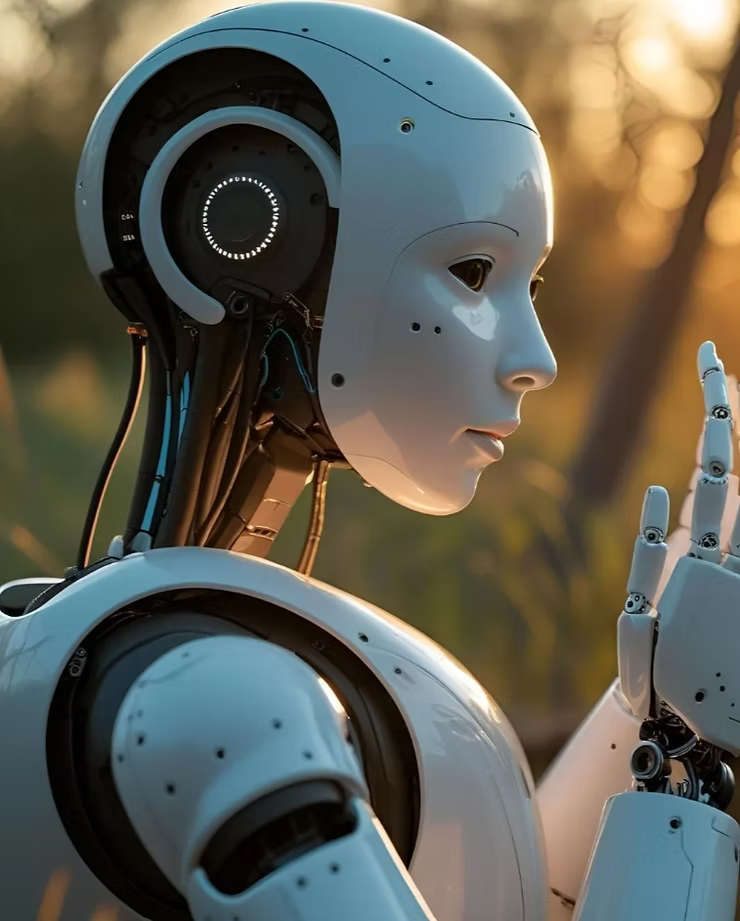
Embodied AI represents a significant leap forward in artificial intelligence, integrating intelligent agents with physical bodies capable of sensing, interacting, and navigating within their environments. By bridging the gap between perception and physical action, embodied AI systems can perform tasks and solve problems that purely digital AI cannot.
Defining Embodied AI
Embodied AI refers to artificial intelligence systems embedded within physical entities, such as robots or autonomous vehicles, that perceive their environment through sensors, process this information, and interact physically with the real world. Unlike traditional AI models that operate in purely digital spaces, embodied AI must handle real-world complexities like noise, uncertainty, and dynamic environments.
Why Embodiment Matters in AI
Embodiment is crucial because real-world intelligence is inherently connected to physical experiences and interactions. Human intelligence is fundamentally embodied — we learn, adapt, and reason through our senses and movements. Replicating this approach in AI promises more natural, intuitive, and effective interactions with the physical world.
Key Challenges in Embodied AI
Developing effective embodied AI systems faces numerous challenges:
- Sensory Integration: Combining and interpreting diverse sensor inputs, such as vision, touch, and auditory data, in real-time.
- Robustness to Environmental Variability: Embodied AI systems must adapt to unpredictable and dynamic surroundings.
- Learning and Generalization: Creating systems that can generalize learned behaviors to novel situations or environments.
Techniques Driving Embodied AI Progress
Several technological advancements are crucial to embodied AI:
- Deep Reinforcement Learning: Enables embodied AI systems to learn complex physical tasks through trial-and-error interactions with their environment.
- Sim-to-Real Transfer: Training AI models in simulated environments before deploying them in real-world scenarios to improve efficiency and effectiveness.
- Sensor Fusion: Integrating data from multiple sensors to create a coherent understanding of the environment, enhancing perception and decision-making accuracy.
Real-World Applications of Embodied AI
Embodied AI is transforming various sectors:
- Robotics: Robots that can navigate complex environments, interact safely with humans, and perform precise tasks in manufacturing, healthcare, and home assistance.
- Autonomous Vehicles: Vehicles capable of perceiving and adapting to road conditions, traffic, and unpredictable human behaviors to ensure safe autonomous driving.
- Assistive Technologies: Embodied AI devices, such as prosthetics and exoskeletons, that significantly enhance human mobility and independence.
Recent Advances and Innovations
Innovations continue to propel embodied AI forward:
- Humanoid Robots: Advancements in robots like Boston Dynamics’ Atlas showcase remarkable capabilities in physical agility, environmental interaction, and problem-solving.
- Autonomous Drones: Drones utilizing embodied AI can autonomously perform complex tasks such as delivery, inspection, and search-and-rescue operations.
- Smart Home Assistants: Embodied devices with AI capabilities interact naturally with household environments, providing enhanced convenience and assistance.
The Future of Embodied AI
Looking ahead, embodied AI holds immense potential for further breakthroughs:
- Enhanced Human-Robot Collaboration: More sophisticated embodied AI will collaborate closely with humans, working together seamlessly in workplaces and daily life.
- Personalized Robotics: Customized embodied AI solutions tailored to individual user needs, preferences, and abilities will become commonplace.
- Autonomous Systems in Extreme Environments: Robust embodied AI systems capable of exploration, maintenance, and operations in hazardous or inaccessible locations like deep-sea or space missions.
Conclusion
Embodied AI represents a transformative advancement, enabling intelligent machines to genuinely interact and collaborate within our physical world. Overcoming current challenges and embracing emerging technologies will unlock unprecedented opportunities, reshaping how we live, work, and engage with technology in the coming decades.