
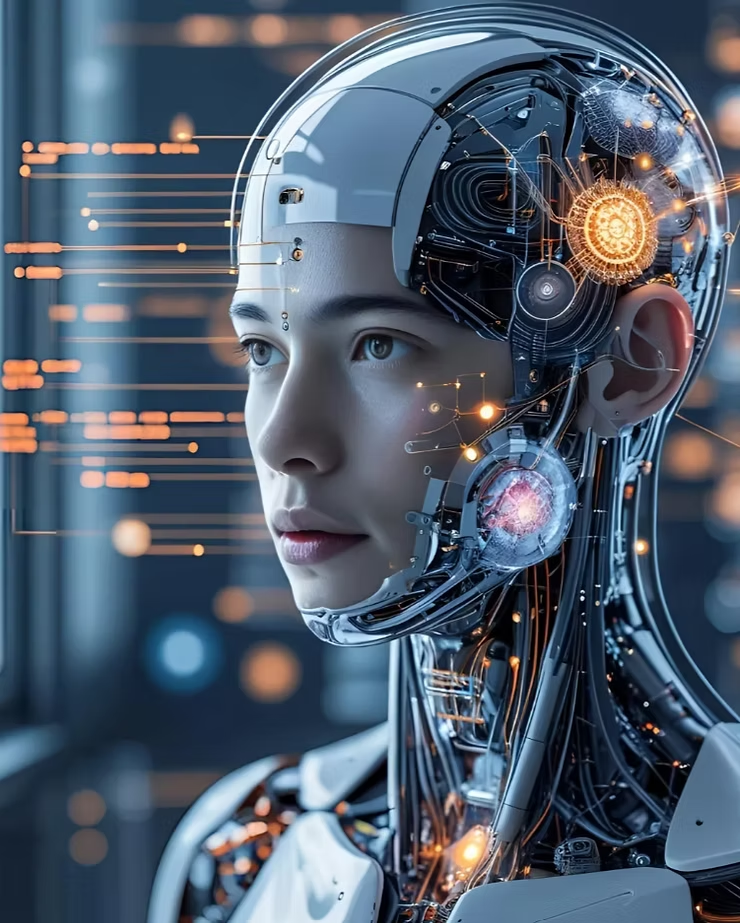
Artificial Intelligence (AI) and cognitive science are deeply interconnected fields, each offering valuable insights and advancements to the other. This collaboration is transforming our understanding of both machine intelligence and human cognition, fueling innovations that enhance the capabilities of intelligent systems while deepening our comprehension of the human mind.
Understanding Cognitive Science and AI
Cognitive science explores the complexities of human thought, perception, decision-making, and learning processes. AI aims to replicate and augment these cognitive abilities within machines. Together, they form a synergistic partnership — insights from cognitive science inform AI development, while advances in AI technologies provide new perspectives into cognitive processes.
Mutual Benefits of Collaboration
The interdisciplinary relationship between AI and cognitive science yields substantial mutual benefits:
- Enhanced AI Models: Understanding human cognitive mechanisms improves AI designs, making them more intuitive and efficient.
- Deeper Cognitive Insights: AI provides new tools for modeling and testing theories of human cognition, offering empirical validation and deeper understanding.
- Innovative Applications: Collaboration between the two fields spurs new technologies such as neuro-inspired computing, intelligent tutoring systems, and adaptive human-computer interfaces.
Key Areas of Intersection
Several research areas highlight the fruitful interplay between cognitive science and AI:
- Neural Networks and Human Cognition: Neural networks, inspired by human brain architecture, provide insights into learning, memory, and perceptual processes.
- Natural Language Processing (NLP): Cognitive science informs NLP advancements by clarifying language understanding and production mechanisms, improving AI-driven communication systems.
- Decision-making and Behavioral AI: Human decision-making models influence AI algorithms for autonomous decision-making in uncertain and complex environments.
Real-World Applications
The integration of cognitive science and AI is evident in numerous applications:
- Education: Intelligent tutoring systems adapt to individual cognitive styles, enhancing personalized learning experiences.
- Healthcare: AI-driven diagnostics benefit from cognitive insights into human decision-making processes, improving accuracy and patient outcomes.
- User Experience Design: Cognitive principles guide AI-driven user interfaces, ensuring intuitive and user-friendly interactions.
Challenges in Integrating Cognitive Science and AI
Despite numerous benefits, integrating cognitive science with AI also presents challenges:
- Complexity of Human Cognition: Human cognitive processes are intricate, dynamic, and context-dependent, making accurate modeling difficult.
- Computational Limitations: Replicating complex cognitive behaviors demands significant computational power and sophisticated algorithms.
- Ethical Considerations: Ethical concerns emerge around replicating or influencing human cognition, requiring careful consideration and guidelines.
Recent Advances and Innovations
Several breakthroughs are enhancing the integration of cognitive science and AI:
- Cognitive Architectures: Frameworks like ACT-R and SOAR integrate psychological theories directly into AI models, providing more accurate cognitive simulations.
- Brain-inspired Computing: Neuromorphic computing replicates neuronal structures and functionalities, enhancing AI efficiency and adaptability.
- Hybrid Intelligence Systems: Combining human cognitive strengths with AI computational capabilities creates systems with unprecedented collaborative intelligence.
Future Directions
The future of collaboration between AI and cognitive science is promising:
- Enhanced Human-AI Teams: Deeper cognitive insights will foster seamless human-AI interactions, enhancing productivity and decision-making.
- Cognitive-inspired AI Personalization: AI systems will become more adept at personalization, tailoring interactions to individual cognitive preferences and abilities.
- Cognitive Neuroscience and AI Integration: Closer integration with neuroscience will further refine AI models and enhance understanding of brain functions.
Conclusion
The intersection of AI and cognitive science represents a powerful alliance that continues to drive innovation in both fields. By mutually enhancing capabilities and insights, this collaborative approach promises significant advancements in understanding human cognition, developing intelligent machines, and shaping a future marked by deeper, more meaningful human-AI collaboration.