Introduction
Agentic AI has quickly transitioned from futuristic vision to tangible reality, transforming industries, reshaping societies, and redefining how we interact with technology. But what’s next for this powerful technology? How will it evolve, and how will it shape our lives in the coming years? In this article, we’ll explore the key trends and predictions about the future of agentic AI, its transformative applications across various sectors, the challenges we might face, and how we can best prepare for this inevitable future.
Defining the Future of Agentic AI
Agentic AI Evolution
The future of agentic AI is marked by continuous evolution towards greater autonomy, adaptability, and integration into everyday life. These intelligent systems are rapidly moving beyond basic automation towards sophisticated decision-making, capable of independently navigating complex, unpredictable scenarios without human intervention.
Consider fully autonomous cars that not only drive safely but autonomously handle complex traffic situations, manage navigation, and even interact seamlessly with city infrastructure. The evolution of agentic AI will fundamentally alter how industries operate, how we live our daily lives, and even how we conceptualize human-AI relationships.
Key Trends Shaping the Future of Agentic AI
Increased Autonomy
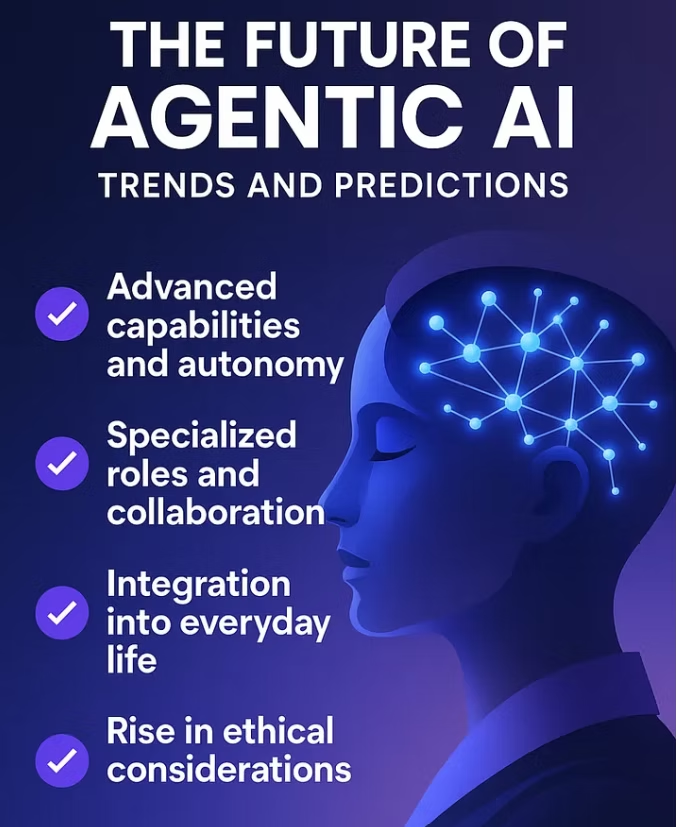
One prominent trend shaping agentic AI’s future is increased autonomy. AI systems will continue to develop the capability to independently manage complex tasks, significantly reducing the need for human oversight. From autonomous manufacturing processes that independently adjust production schedules to AI-driven medical systems independently diagnosing and treating patients, increased autonomy will be central to future AI developments.
Ethical and Transparent AI
As AI autonomy increases, so will the demand for ethical and transparent AI systems. Users, regulators, and businesses alike will require clear understanding of how AI makes decisions. Transparent, explainable AI will be vital to building public trust, ensuring accountability, and aligning AI systems with human ethical standards. Future AI will likely integrate sophisticated transparency mechanisms, providing clear explanations for decisions, minimizing biases, and proactively addressing ethical concerns.
Enhanced Human-AI Collaboration
Future agentic AI will increasingly emphasize collaboration rather than replacement of human roles. These AI systems will complement human skills, autonomously managing routine or dangerous tasks while empowering humans to focus on creativity, innovation, and strategic thinking. Imagine workplaces where humans and agentic AI seamlessly collaborate — AI autonomously handling data analytics, and humans using these insights for creative problem-solving and innovation.
Future Applications of Agentic AI Across Industries
Healthcare Innovations
Healthcare will continue benefiting profoundly from agentic AI, experiencing advancements like fully autonomous medical diagnostics and surgeries, predictive health interventions, and personalized medicine. Autonomous healthcare systems could drastically improve patient outcomes, accessibility, and cost-efficiency, revolutionizing healthcare delivery globally.
Smart Cities and Autonomous Transportation
Agentic AI will drive significant innovations in smart city infrastructure and transportation. Cities powered by AI could autonomously manage traffic flow, public safety, energy consumption, and environmental monitoring, greatly enhancing urban life quality. Autonomous transportation will become mainstream, significantly reducing accidents, enhancing mobility, and streamlining logistics.
Personalized Education
In education, agentic AI could autonomously provide personalized learning experiences, adapting content and pace to individual student needs. Autonomous educational platforms could dynamically adjust curriculum based on real-time student performance, ensuring optimal learning outcomes and bridging educational gaps effectively.
Challenges and Risks in the Future of Agentic AI
Regulatory and Ethical Dilemmas
As agentic AI becomes more prevalent, ethical dilemmas around data privacy, algorithmic bias, AI accountability, and autonomy will intensify. Developing robust regulatory frameworks to address these challenges proactively will become critical. Societal debates on the morality of autonomous AI decisions, particularly in sensitive areas like healthcare or law enforcement, will become increasingly prevalent.
AI Safety and Control
Ensuring AI safety will become a paramount concern as agentic AI grows increasingly autonomous. The risk of AI systems independently making harmful decisions — intentionally or unintentionally — will necessitate rigorous safety standards, monitoring mechanisms, and clear human oversight capabilities to maintain control and accountability.
Preparing for the Agentic AI Future
Education and Workforce Adaptation
Preparing for the agentic AI future involves significant investments in education and workforce adaptation. Governments and businesses must proactively equip workers with necessary AI-related skills, fostering lifelong learning to ensure adaptability. Education systems should emphasize skills complementing AI capabilities, such as creativity, emotional intelligence, and complex problem-solving.
Policy Development and Governance
Developing robust policy frameworks and governance structures will be critical for responsibly integrating agentic AI into society. Governments must proactively establish ethical AI guidelines, transparency standards, and accountability frameworks to ensure responsible AI deployment. Global collaboration will be essential, creating unified standards ensuring agentic AI benefits humanity universally.
Conclusion
The future of agentic AI promises incredible opportunities, transforming industries, enhancing human lives, and reshaping societies. However, this exciting future demands proactive measures addressing ethical, regulatory, and societal challenges. By preparing thoughtfully, embracing transparent, ethical AI practices, and fostering human-AI collaboration, society can harness agentic AI’s transformative potential responsibly, ensuring a brighter, safer, and more innovative future for all.