
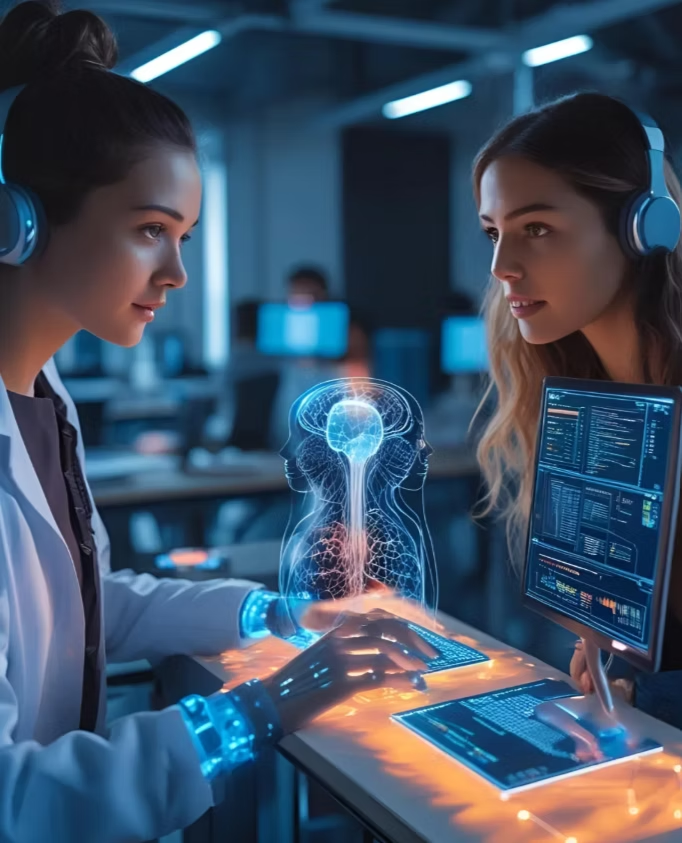
Multimodal AI is an advanced form of artificial intelligence that integrates multiple types of data inputs — including text, speech, images, and videos — into a single coherent system. By combining these varied data streams, multimodal AI creates a richer, more natural interaction between humans and machines. This technology represents a significant advancement in AI’s ability to interpret and respond to the complexities of real-world environments.
Understanding Multimodal AI
Multimodal AI leverages deep learning architectures, such as convolutional neural networks (CNNs) for visual data and recurrent neural networks (RNNs) for sequential data, to simultaneously process and analyze multiple modalities. The integration of these diverse inputs allows AI systems to gain comprehensive contextual understanding, enhancing their decision-making capabilities and responses.
Comprehensive Contextual Understanding
The primary advantage of multimodal AI is its ability to interpret context more accurately than single-modal systems. By correlating data from multiple sources, multimodal AI systems can discern nuances, interpret emotions, and respond appropriately to complex scenarios.
Enhanced Human-Machine Interaction
Multimodal AI significantly improves the user experience by allowing for more natural interactions with AI systems. Users can engage with multimodal AI through speech, gestures, facial expressions, and written inputs, creating a seamless and intuitive communication experience.
Applications of Multimodal AI
Customer Service
In customer service, multimodal AI enhances interactions through AI-powered chatbots and virtual assistants capable of interpreting text, voice, and visual cues. These systems deliver personalized, context-aware support, leading to increased customer satisfaction and loyalty.
Healthcare Diagnostics
Multimodal AI significantly improves diagnostic accuracy by combining patient histories, medical imaging, and clinical notes into an integrated analysis. This holistic approach enables healthcare providers to detect diseases earlier, make more precise diagnoses, and formulate effective treatment plans.
Education and Training
In education, multimodal AI facilitates personalized learning experiences by adapting to students’ learning styles and emotional responses. Systems can analyze verbal interactions, written assessments, and even facial expressions to deliver tailored educational content that enhances engagement and learning outcomes.
Benefits of Multimodal AI
Increased Accuracy
By combining multiple data sources, multimodal AI reduces errors inherent in single-modality interpretations. Cross-referencing inputs ensures higher accuracy, making multimodal systems reliable for critical applications in healthcare, automotive safety, and security.
Improved Accessibility
Multimodal AI makes technology accessible to a broader range of users, including individuals with disabilities. For example, speech recognition and gesture control can help those with limited mobility or visual impairments effectively use digital devices.
Richer Insights
Analyzing data across multiple modalities provides richer insights into user behavior, market trends, and operational efficiencies. Businesses can leverage these insights for strategic decision-making, marketing optimization, and user experience enhancements.
Challenges and Ethical Considerations
Despite its numerous advantages, multimodal AI faces several challenges:
Data Complexity and Integration
Integrating diverse data types requires sophisticated algorithms capable of accurately interpreting complex correlations. Ensuring seamless and accurate data fusion remains a significant technical challenge.
Privacy and Security Concerns
Handling multiple modalities of data raises privacy concerns, particularly with sensitive information such as biometric data. Organizations must implement stringent security measures to protect user data and comply with privacy regulations.
Bias and Fairness
Bias in training data across various modalities can lead to discriminatory outcomes. Ensuring fairness and mitigating biases across different data inputs require continuous oversight and rigorous validation processes.
Future Developments
Advanced Integration Techniques
Future multimodal AI systems will likely employ more sophisticated integration techniques, including advanced neural architectures and federated learning, enhancing accuracy and responsiveness further.
Expanded Real-World Applications
As multimodal AI matures, its applications will broaden, impacting fields like augmented and virtual reality, autonomous vehicles, and advanced robotics. This expansion will facilitate deeper integration into daily life and professional environments.
Regulatory Evolution
As adoption increases, regulations around multimodal AI will evolve, focusing on ethical usage, data privacy, and transparency. Organizations will need to stay ahead of these changes to leverage multimodal AI responsibly and effectively.
Conclusion
Multimodal AI represents a transformative leap in artificial intelligence, dramatically enhancing human-machine interactions by integrating diverse data streams into coherent, context-aware systems. While challenges remain, the potential benefits — improved accuracy, richer insights, and broader accessibility — make multimodal AI indispensable for future technological advancements. Embracing this innovation will position organizations at the forefront of the digital transformation, driving significant growth and enhanced user experiences.